
Apartments for First-Time Renters With No Rental History in Austin
Never leased before? Learn how Austin communities treat zero rental history and which deposit and guarantor options approve first-timers.
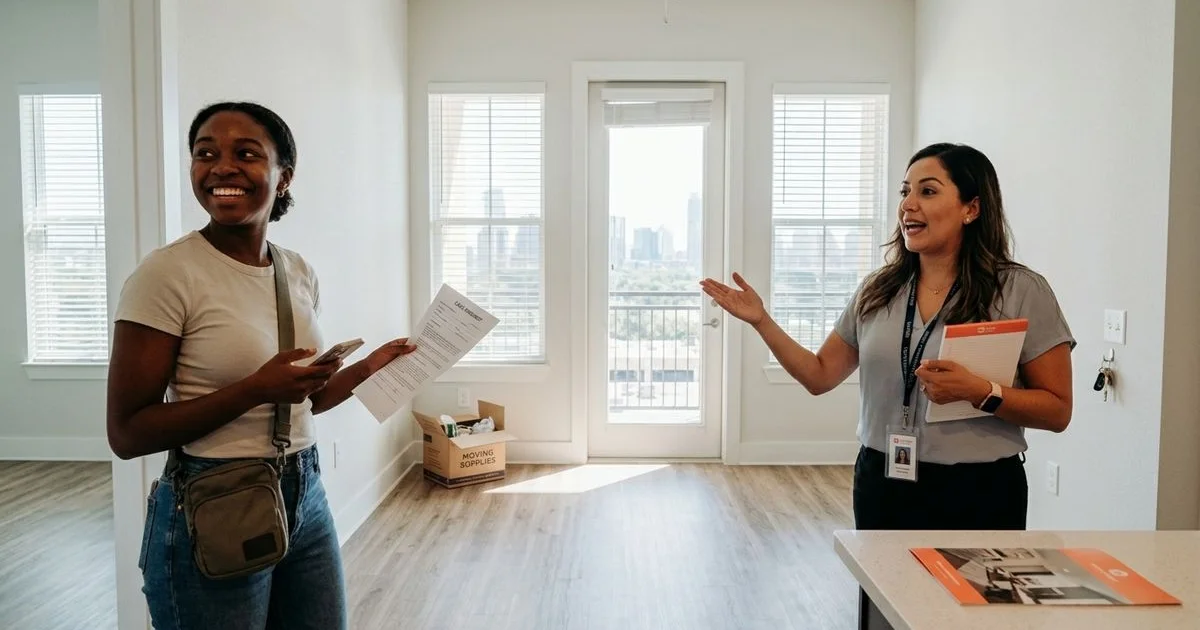
You finally decided to secure your own place. The standard application process feels like a solid brick wall for many applicants. Most property managers demand a background record you simply lack.
This catch-22 frustrates both brand new applicants and second-chance renters trying to recover from bankruptcies or bad credit scores under 550.
We see this exact hurdle every day in the Austin market. The good news is that plenty of local property managers actually want to work with thin-file applicants. They just skip the massive billboard ads and generic listing sites.
Our team at Bad Credit Apartments built a dedicated first-time renter service that connects you directly with these flexible properties.
Let’s break down exactly how communities evaluate applications for no rental history apartments austin. We will cover the core paperwork you need and map out the realistic costs. This data ensures you can sign your lease with confidence and avoid wasting money on instant rejections.
How Austin communities treat zero rental history
Property managers handle applications for no rental history apartments austin in a few distinct ways. The exact approach largely depends on whether the property uses manual underwriting or automated software. We highly recommend finding properties with human leasing agents who can look beyond a single credit number.
Automated systems like RealPage or Yardi often auto-decline applicants with scores under 550. The most common solution involves proving strong income to offset the missing background data. We categorize these first time renter apartments austin based on their specific approval methods.
Here are the four main ways communities process your application:
Income-Weighted Approvals
These communities care primarily about whether you can pay the rent on time. Rental history takes a backseat to strong income and documented job stability. You generally need to prove you make three times the monthly rent.
The average rent in Austin sits around $1,950 as of 2026. This means you must show about $5,850 in monthly income to qualify at a typical complex. We see this method used frequently in workforce-housing properties and student-friendly communities.
The Co-Signer Route
Many A-class and corporate-managed communities require a personal co-signer for any thin-file applicant. This person is usually a parent or relative with excellent credit. Their financial standing guarantees the lease if you fall behind on payments.
A co-signer must typically prove they make at least five times the monthly rent to qualify under standard Austin property management guidelines.
Our data shows this is the fastest way to bypass a low credit score.
Increased Security Deposits
Some communities accept a larger upfront deposit in place of a past landlord reference. You might pay 1.5 to 2 times the normal deposit amount. The deposit returns to you at move-out if you leave the unit clean and damage-free.
We find this makes the long-term cost very reasonable for second-chance renters.
Alternative Reference Checks
Smaller independently owned properties sometimes accept professional references instead of a previous landlord. These character references prove your reliability to a cautious landlord.
You can provide contacts for:
- A current or previous employer
- A university academic advisor
- A respected community member
Our locating agents frequently use this strategy with private owners.
What you can prepare
You must prepare a complete package of personal identification, income verification, and professional references before touring. Handing the leasing agent this full stack of documents on day one drastically speeds up your approval. We tell every client to organize this standard set of core paperwork early.
This preparation proves you are responsible and ready to rent. Here is the core documentation set for an applicant seeking a first apartment no history:
- Government-issued photo ID: A valid driver’s license or passport.
- Proof of income: Provide W-2 pay stubs or an official offer letter for a new job. Independent contractors should provide 60 days of bank statements to show stable cash flow.
- References: List your current employer, a school administrator, or a previous roommate.
- Co-signer documentation: Have their ID, proof of income, and credit information ready if you plan to use their financial backing.
Any existing credit history counts as a positive factor in your application. A simple credit card, a paid-off car loan, or active student loans will establish a basic credit file. You must lean heavily on your income and references if you have absolutely zero credit.
We advise keeping all your documents organized in a single digital folder for fast sharing. A helpful way to think about your application is to compare a standard file with a second-chance file.
| Applicant Type | Primary Focus | Key Document Required |
|---|---|---|
| Standard First-Timer | Establishing initial trust | Offer letter or recent pay stubs |
| Second-Chance Renter | Proving current stability | 60+ days of bank statements |
Realistic timelines and budgets
A clean application from a first-time renter usually gets approved in 24 to 72 hours. You should budget two to three times the monthly rent in cash to cover standard move-in fees. We always remind clients that upfront costs go beyond just the first month of rent.
Moving into a new place requires a solid cash reserve. Here are the budget expectations for securing a unit in Austin right now:
- Application fee: Expect to pay $50 to $75 per applicant. Texas Property Code Section 92.351 dictates that these fees are legally non-refundable.
- Administrative fee: This runs $100 to $300 and is due at lease signing.
- Security deposit: Clean applicants usually pay one full month of rent. Thin-file or bad credit applicants often pay 1.5 times the rent.
- First month’s rent: The property may require this upfront or prorate it based on your exact move-in date.
- Utility deposits: Setting up a new Austin Energy account requires a standard $200 residential deposit. You can get this waived by enrolling in AutoPay or providing a written letter of reference.
Your total cash needed to move in usually equals a few thousand dollars depending on the base rent. We suggest saving this exact amount before you start submitting applications. This cash buffer prevents stressful scrambling on move-in day.
Where to start
Workforce-housing communities, student-friendly complexes near universities, and mid-market properties are the best places to start your search. These specific areas of Austin cater heavily to transitional renters and essential workers. We focus our searches on districts that understand non-traditional backgrounds.
Most thin-file and second-chance applicants do exceptionally well in these targeted zones:
- Workforce-housing communities: Look in Round Rock, Pflugerville, North Austin, and South Austin. The 2026 Austin Strategic Housing Blueprint targets households making 60% to 100% of the area median income for these specific units.
- Student-friendly communities: Properties near the University of Texas have established workflows for thin-file applications. Focus on Riverside, the North Loop, Far West, and the North Lamar corridor.
- Mid-market garden-style properties: Older complexes in Travis County and Williamson County frequently use manual underwriting instead of strict corporate algorithms.
You should avoid applying to A-class downtown high-rises or luxury Domain-area communities for your very first lease. Their corporate screening algorithms are generally much stricter. We know from experience that an automatic rejection at a luxury building just wastes your non-refundable application fee.
Start your search where the management is actually motivated to approve you.
Common mistakes first-timers make
The most common mistakes include applying for units above your income level and skipping required supporting documents. A simple error in these areas can lead to an instant denial and a lost application fee. We want you to avoid the classic traps that cost renters valuable time and money.
The biggest mistake is applying blindly without checking the property’s specific approval criteria. Watch out for these common pitfalls during your apartment hunt:
- Applying above your means: Never apply for a unit where the rent exceeds your reliable, documented income.
- Skipping the supporting documents: Never assume the basic application form is enough on its own.
- Ignoring the fine print: Always ask about pet rules, parking fees, and guest policies before signing a binding contract.
- Underestimating the total budget: Make sure to account for utility deposits, internet access, and renter’s insurance.
- Choosing amenities over logistics: Do not pick a community just for the pool without checking your daily commute and neighborhood noise levels.
Texas law requires landlords to provide a written copy of their tenant selection criteria before taking your application money. Always ask to see this document first. If their criteria strictly requires a 650 credit score and you have a 520, do not apply.
We guide clients through this exact process safely every single day. You can Tell us your situation today to find no rental history apartments austin.
Our experts will send a shortlist matched to flexible communities within 24 hours. This service is completely free and carries zero obligation. We are ready to help you secure the keys to your new home.
Frequently Asked Questions
Can I rent in Austin with no rental history at all?
Yes, often. Many Austin communities accept first-time renters who can show steady income, a co-signer, or willingness to pay a slightly higher deposit. The communities most welcoming to first-timers are workforce-housing properties and student-friendly communities.
Will I need a co-signer?
Sometimes, but not always. A co-signer strengthens a thin file but isn't always required, especially if your income comfortably exceeds 3x rent. We tell you per community whether a co-signer actually helps your specific application.
What should I prepare as a first-time renter?
Government-issued ID, proof of income (pay stubs, offer letter, or bank statements), and at least one solid reference — a current employer, school administrator, or person who can vouch for your reliability. Some communities ask for references from people you've lived with previously (parents, roommates).
Ready to get a real list of apartments that will say yes?
Our licensed Austin locators pre-qualify you against each community's real screening criteria — so you only apply where approval is realistic. 100% free.
Get My Free List